NEWS CENTER

Dept. Industrial Engineering and U-Tokyo organized “Text Mining by Using Python: Application to Patent Documents” seminar

Department of Industrial Engineering, Faculty of Chulalongkorn University, Chulalongkorn University, and The University of Tokyo organized a 3-day technical seminar “Text Mining by Using Python: Application to Patent Documents”, on May 27, 29, and 31 at the Room 407, Department of Industrial Engineering. The course was given by Professor Dr. MOTOHASHI, Kazuyuki, Department of Technology Management for Innovation, The University of Tokyo, Japan; and Dr. Suchit Pongnumkul. There were about 20 participants joined the seminar from various departments of Chula Engineering, from undergraduate level till postdoctoral level.

Day 1 started with Associate Professor Dr. Paveena Chaovalitwongse, Department Head, who gave an opening speech before beginning the seminar. Along with the seminar, the participants learned from pre-homework, the in-class lecture, and at-home assignments; not only the technique of the text mining but also the concept and definition of the patent system.


Posted in PR

Free Seminar for Chula Engineering Students (all majors)

Free Seminar for Chula Engineering Students (all majors)
Department of Industrial Engineering, Chula Engineering, and The University of Tokyo, Japan, present
“Text Mining by Using Python: Application to Patent Documents”
Instructor: Prof. Kazuyuki Motohashi (U-Tokyo, Japan)
Teaching Assitant: Dr. Suchit Pongnumkul
Date: May 27, 29, 31, 2019
Time: 09:00-12:00
Venue: Room 407, 4F, Engineering Building 4, Faculty of Engineering, Chulalongkorn University
Language: English (and Thai by TA)

  • Contents
    – Introduction to patent data analysis
    – What is patent data? Why is it used for technology management research?
    – Various kinds of patent database: PATSTAT, JPO (IIP patent database), USPTO
    – Keyword extraction, TF-IDF, similarity measures
    – VIDEO (O’Reilly Media) https://www.oreilly.com/learning/how-do-i-compare-document-similarity-using-python
    – HOMEWORK: Apply patent abstract documents to the Video exercise above, and extract three keywords by using TF-IDF scores
  • Patent Similarity
    – Review of homework
    – Preprocessing of text: tokenization regularization (lowering character), stemming/lemmatization and stop words exclusion
    – Text processing of tf-idf vectors:

1. Create dictionary: mapping every word to a number
2. Corpus (list of bags of words) : a list of number of words occurring in each documents
– Calculation of similarity measures across each documents : genism.similarities
– Topic Modeling
– What is topic modeling (with some examples)
1. Understanding the concept: LDA
– Gensim module in Python Topic modeling works for the following three technologies, comparison with JPO classification
1. Artificial intelligence
2. Autonomous driving
3. Gene modification technology
– Good reference about topic modeling by genism https://www.machinelearningplus.com/nlp/topic-modeling-gensim-python/
– Assignment for further works (three weeks program)

RSVP at https://forms.gle/mPYfDKYx8VmR8jQM8
Capacity: 20 seats
(Registration deadline: May 18, 2019)
Contact: Natt Leelawat, D.Eng. (natt.l@chula.ac.th)

Posted in PR

Professors from TAC-MI and EISESiV of Tokyo Institute of Technology visited Chula Engineering

On March 20, 2019, Faculty of Engineering, Chulalongkorn University, welcomed a visit of Prof. Dr. Miki Saijo and Asst. Prof. Dr. Takumi Ohashi from the Department of Transdisciplinary Science and Engineering, School of Environment and Society, Tokyo Institute of Technology, Japan.

Prof. Saijo introduced the Tokyo Tech Academy for Convergence of Materials and Informatics (TAC-MI), a Tokyo Tech’s new cross-disciplinary educational program focused on materials and devices, and information technology, to Assoc. Prof. Dr. Supot Teachavorasinskun (Dean of Chula Engineering), Assoc. Prof. Dr. Tawatchai Charinpanitkul (Deputy Dean for Academic Affairs), and Dr. Natt Leelawat (Lecturer of Department of Industrial Engineering). Then, Asst. Prof. Ohashi presented about the Research Center for the Earth Inclusive Sensing Empathizing with Silent Voices (EISESiV) and their current research project. The possibilities of the internship program, exchange program, and research and curriculum collaboration have been discussed.

Then, Prof. Saijo and Asst. Prof. Ohashi visited the Department of Industrial Engineering to have a meeting with Assoc. Prof. Paveena Chaovalitwongse (Department Head).

Before leaving, the two professors also visited and had a short meeting with Master’s students at the Disaster and Risk Management Information Systems (DRMIS) Laboratory, Chulalongkorn University.


Department of Industrial Engineering welcomed Dean of the Graduate School of Engineering and Management, The Air Force Institute of Technology

On March 6, 2019, Department of Industrial Engineering, Faculty of Engineering, Chulalongkorn University, welcomed Prof. Dr. Adedeji B. Badiru, Dean of Graduate School of Engineering and Management, The Air Force Institute of Technology, USA, and his wife.
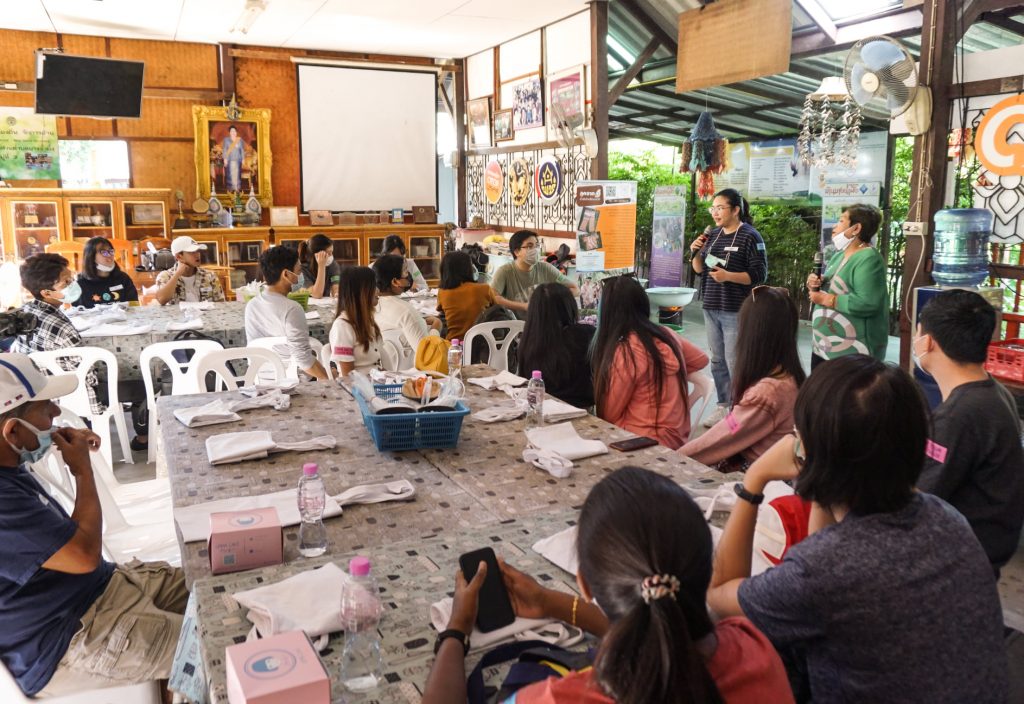
During their visit, Assoc. Prof. Dr. Paveena Chaovalitwongse (Department Head), Assoc. Prof. Dr. Wipawee Tharmmaphornphilas, Asst. Prof. Poom Luangjamekorn, Asst. Prof. Surapong Sirikulvadhana, Dr. Amonsiri Vilasdaechamont, and Dr. Natt Leelawat from the Department of Industrial Engineering; and Assoc. Prof. Dr. Chuvej Chansa-ngavej (Deputy Director of the Regional Centre for Manufacturing Systems Engineering (RCMSE) , Chulalongkorn University) joined the meeting and discussion on curriculum and research between the two universities.

After that, Assoc. Prof. Dr. Chuvej Chansa-ngavej introduced the RCMSE to the visitors. Then, Dr. Natt Leelawat (Head of the Disaster and Risk Management Information Systems Research Group, Chulalongkorn University) introduced the DRMIS Lab to the visitors.

Posted in PR

Chulalongkorn University Signs as iRAP Centre of Excellence in Global Road Infrastructure Safety

The Chulalongkorn University and the International Road Assessment Programme (iRAP) have signed a Centre of Excellence agreement today, which will support the development of road infrastructure safety in Thailand as well as internationally.

 Speaking from the Safety 2018 Conference in Bangkok, Associate Dean of the Faculty of Engineering, Associate Professor Kasem Choocharukul said we are delighted to join with iRAP’s nine Centres of Excellence world-wide to provide road infrastructure safety technical leadership.

“As a Centre of Excellence, Chulalongkorn University will focus on building local capacity for high quality risk mapping, star rating and safer road investment planning assessments across Thailand.  We will also work in partnership with the Ministry of Transport, Department of Highways, Department of Rural Roads, Office of Transport and Traffic Policy and Planning, the University and other key stakeholders to build a locally led ThaiRAP programme that will save lives and serious injuries across the country”.

“This partnership with iRAP will build on our Road Assessment Programme experience made possible through the Bloomberg Philanthropies supported BIGRS partnership with the World Bank-GRSF and iRAP.  The links with iRAP’s partner network across more than 90 countries worldwide will ensure we can accelerate progress toward the achievement of the UN Targets and eliminate high-risk roads across the country,” Professor Choocharukul said.

Road Infrastructure Star Rating assessments are already informing safer road designs and upgrade projects in Thailand, including assessments with the Department of Highways, Department of Rural Roads and Bangkok Metropolitan Administration and detailed training is already building local capacity for the future.

iRAP Chief Executive Officer Rob McInerney said addressing the level of death and injury on roads in Thailand is a priority for the country and the world.  The World Health Organisation reports that Thailand has the second highest road traffic fatality rate in the world with an annual estimate of over 24,000 deaths or 66 deaths every day. Pedestrians, cyclists and motorcyclists account for 83% of road fatalities in Thailand and road crashes cost Thailand an estimated 3 to 5 % of its GDP (WHO, 2018).

“The expertise of Chulalongkorn University and other local partners in building a successful ThaiRAP programme can help reduce death and injury across the country.  In particular the elimination of 1 and 2-star roads for pedestrians, cyclists and motorcyclists is a priority. Meeting the UN Global Road Safety Target to achieve more than 75% of travel on 3-star or better roads for all road users in Thailand by 2030 will reduce death and injury across the country by more than a third.  Importantly iRAP estimates there will be at least ฿34 of benefits for every ฿1 invested” Mr McInerney said. 

“Chulalongkorn University has a 101 year history as Thailand’s national university and is well placed to be a Centre of Excellence having demonstrated distinction in road safety engineering and focused research activities for the public good.  Local innovation and expertise in providing evidence-based solutions for vulnerable road users will save lives in Thailand and will benefit all of the iRAP partners around the world.”

“We look forward to working with Chulalongkorn University as well as the Thai Government, mobility clubs, development banks and local road safety stakeholders to build a great ThaiRAP programme and save lives across the country,” Mr McInerney said.

Other iRAP Centres of Excellence include ARRB Group in Australia, Instituto Mexicano del Transporte (IMT), Labtrans in Brazil, the Korea Transport Institute (KOTI), Malaysian Institute of Road Safety Research (MIROS), MRIGlobal based in the USA, TRL in the United Kingdom,  and SWOV in the Netherlands.

iRAP is a Global Charity which provides tools and training to help governments, mobility clubs, funding agencies, development banks, research institutes and other non-government organisations in more than 90 countries to help make their roads safer.

Star Ratings are based on road inspection data and provide a simple and objective measure of the level of safety which is ‘built-in’ to the road for vehicle occupants, motorcyclists, bicyclists and pedestrians. Five-star roads are the safest while one-star roads are the least safe. 3-star or better is the goal standard.

For further information on the current situation of Thailand’s roads, the road attributes that matter to mitigate risk, and the business case for safer roads, visit the Vaccines for Roads Big Data Tool.


Media enquiries to:

Judy Williams, Global Programme Manager, iRAP

email : judy.williams@irap.org, tel +61 400 782 20


Associate Prof Kasem Choocharukul, PhD, Faculty of Engineering, Chulalongkorn University

email : kasem.choo@chula.ac.th, tel +66 2218 6309

Posted in PR

เราใช้คุกกี้เพื่อพัฒนาประสิทธิภาพ และประสบการณ์ที่ดีในการใช้เว็บไซต์ของคุณ คุณสามารถศึกษารายละเอียดได้ที่ นโยบายความเป็นส่วนตัว และสามารถจัดการความเป็นส่วนตัวเองได้ของคุณได้เองโดยคลิกที่ ตั้งค่า

Privacy Preferences

คุณสามารถเลือกการตั้งค่าคุกกี้โดยเปิด/ปิด คุกกี้ในแต่ละประเภทได้ตามความต้องการ ยกเว้น คุกกี้ที่จำเป็น

Allow All
Manage Consent Preferences
  • คุกกี้ที่จำเป็น
    Always Active

    ประเภทของคุกกี้มีความจำเป็นสำหรับการทำงานของเว็บไซต์ เพื่อให้คุณสามารถใช้ได้อย่างเป็นปกติ และเข้าชมเว็บไซต์ คุณไม่สามารถปิดการทำงานของคุกกี้นี้ในระบบเว็บไซต์ของเราได้

  • คุกกี้เพื่อการวิเคราะห์

    คุกกี้ประเภทนี้จะทำการเก็บข้อมูลพฤติกรรมการใช้งานเว็บไซต์ของท่าน โดยมีจุดประสงค์คือนำข้อมูลมาวิเคราะห์เพื่อปรับปรุงและพัฒนาเว็บไซต์ให้มีคุณภาพ และสร้างประสบการณ์ที่ดีกับผู้ใช้งาน เพื่อให้เกิดประโยชน์สูงสุด หากท่านไม่ยินยอมให้เราใช้คุกกี้นี้ เราอาจไม่สามารถวัดผลเพื่อการปรับปรุงและพัฒนาเว็บไซต์ให้ดีขึ้นได้

Save